
Youth unemployment remains an issue across developed economies. In some, more than half of those aged 20-24 are not in employment, education or training (NEET). In a recent index from PwC, the firm looks at how youth employment engagement has changed since 2005, finding that the situation declined significantly in Spain and Italy. For the UK, reducing the NEET rate to that of the best-in-region has the potential to add £55 billion, while for the 34 countries together an additional $1.2 trillion would be generated.
Since the 2008 economic crisis, the youth in the world’s developed countries have faced an uphill battle securing a place for themselves within their respective economies. In many countries youth unemployment skyrocketed, leading pundits to talk about a ‘lost generation’. The consequences for those out of employment for a length of time come with negative effects on future employability, productivity and broader life chances – exuberating further conditions such as crime, drug abuse and critically questioning the system.
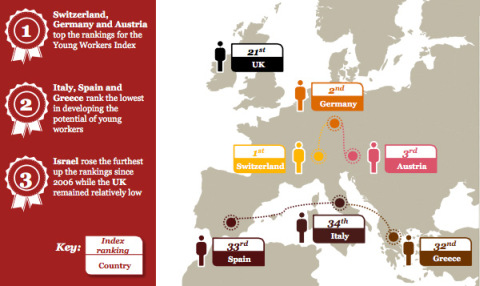
Levels of unemployment vary considerably across various developed countries however. Germany’s youth (15-24) unemployment has fallen to below pre-crises levels to 8%, while in Spain and Greece levels have jumped to above 50% in recent years. Furthermore, the number of youth (20-24) not in employment, education and training (NEETs) stands at 10% in Germany, Switzerland and Austria, while being above 30% in Turkey, Italy, Greece and Spain. Read more